Bedroom Furniture
Bedroom Lighting Guide: How to Layer Light for Better Sleep
Three light layers, one warm color temperature, and switches within reach of the bed — the bedroom lighting setup that helps you wind down.
By Ruth Alder · ·
Most bedrooms are lit badly in the same way: one bright cool overhead fixture, flipped on at full power the moment you walk in, and nothing else. That single light fights everything a bedroom is for. Good bedroom lighting is layered — a soft ambient base, one focused task light at the bed, and enough control that you never need the bright switch after dinner. The three layers cost less than a new mattress and change how the room feels every single night.
The three layers that do the work
Think of bedroom light in three jobs, not fixtures. Ambient light is the base layer that lets you walk, tidy, and find things without squinting — its job is to be even and never harsh. Task light is the focused beam that serves one activity: reading in bed, folding laundry, applying medication. Accent light is optional and slow: a small glow that keeps the room from going pitch black at night.
A room with all three runs like this: a dim wall sconce or shaded lamp as ambient, one reading lamp per sleeper as task, and a nightlight near the door path as accent. If you only have budget or patience for one upgrade, it is the task layer — the bedside lamp you touch every night matters more than anything on the ceiling.
| Layer | Job | Typical source | Target output |
|---|---|---|---|
| Ambient | Even base light, no glare | Shaded lamp or sconce | 800–1,600 lumens total |
| Task | One focused activity | Bedside reading lamp | 400–500 lumens each |
| Accent | Safe path at night | Low nightlight | Under 50 lumens |
Color temperature: warm wins at night
Color temperature, measured in kelvins, decides how daytime a light feels. Light around 2700K — the color of an old incandescent bulb — is warm and carries little of the blue content that signals morning to your body clock. Light at 4000K and above reads clinical and actively pushes back against wind-down. For a bedroom, every evening-facing bulb should be 2700K or lower; some people go to 2200K for nightlights.
The practical move is to separate bulbs by purpose rather than chasing one perfect bulb. A closet or dressing area can run neutral 3500K, where seeing true colors is genuinely useful. Everything within sight of the bed stays warm. If one fixture serves both jobs, put a smart bulb in it and schedule the shift instead of rewiring anything.
Get the bedside light right
The bedside lamp is the most-used light in the house — more touches per day than any switch. It needs three properties. Enough output to read by, around 400 to 500 lumens with a dimmer to pull it down. A shade that sits low enough that the bulb is not visible from a lying position, because a bare bulb at eye level while reading on your side is a nightly annoyance. And a switch you can reach without leaving the bed.
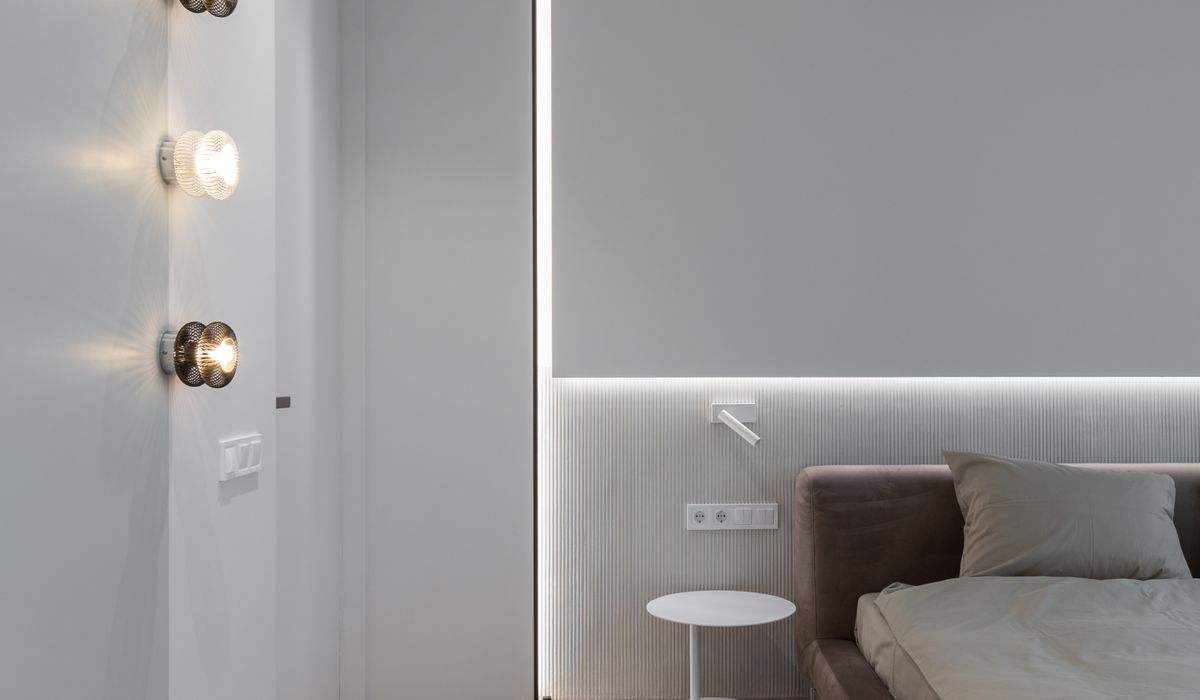
Wall-mounted task lights free the nightstand surface and aim the light exactly where reading needs it.
Wall sconces solve the reach problem in the tightest rooms. Mounted at slightly above seated eye level, they put light on the page instead of the pillow, and they free the entire nightstand surface — which matters in small rooms where a lamp competes with a phone, a book, and a glass of water. The same space logic that drives small bedroom layout ideas applies here: light that hangs or mounts costs zero floor and zero table area.
Placement: switches decide everything
A lighting plan fails if the first thing you do entering the room is walk into darkness, and the last thing you do is get up to turn lights off. Two rules fix most of it. Every bedroom needs a switch at the door for arrival, even if it only controls a lamp through a smart plug. And every sleeper needs light control from the bed, because nobody should cross a dark room to dim a lamp before sleep.
Measure the reach the same way you would check nightstand height: sit on the bed where you actually sit, and extend your arm. The lamp switch should land comfortably inside it. For shared beds, each side gets its own control — negotiating one shared light level is a smaller argument, but it happens every night.
What to avoid
The common failures are all fixable in an afternoon. One overhead fixture and nothing else, which flattens every face and makes the room feel like a waiting area. Cool-white bulbs above the bed, which keep the room in work mode until the second you switch off. Lamps chosen for shape alone, placed where they glare directly into a lying sightline. And dimmers skipped: a dimmer on the bedside lamp converts one fixture into an evening lamp, a reading lamp, and a nightlight, which is the cheapest flexibility in the room.
If the room doubles as a workspace, do not blend the two lights. Keep the desk lamp neutral and bright, keep everything near the bed warm and dimmable, and the same room will behave like two rooms at the right hours.
Renters and no-wiring fixes
None of this requires an electrician. Smart bulbs turn any existing lamp into a dimmable, schedulable one — set a 2700K warm scene for evenings and a low 2200K scene for late nights, and the fade-out happens on its own. Plug-in sconces mount with two screws and give headboard-side light where there is no room for a table. Battery nightlights with dusk sensors handle the path-lighting job for a few dollars and need no outlets at all.
Lighting is the cheapest furniture-class decision in the bedroom furniture lineup, and unlike a mattress it is adjustable every night. Start with the bedside layer, warm the bulbs, add the dimmer, and the rest of the room follows.
Layer recap
Specs first, owners second. Check the layer you are about to buy against the layers above and below it — most bad reviews are mismatches, not bad products.
- Foundation
- Slat spacing and center support decide whether the mattress above keeps its shape. Read the foundation guide
- Support
- Firmness is a 1–10 scale, not a feeling — read it by weight and sleep position. Read the support guide
- Comfort
- A topper fixes one specific problem. Anything over 2 in only changes surface feel. Read the comfort guide
- Warmth
- Fill power means nothing without fill weight beside it. Read the warmth guide
- Surface
- Weave, staple length and GSM — then read the wash count, not the thread count. Read the surface guide
- Finish
- Loft has to match sleep position, and it has to come back overnight. Read the finish guide
Bed Layers, Decoded puts all six layers on one page — the numbers worth checking, the marketing traps, and how to read owner feedback before you order.
FAQ
What color temperature is best for bedroom lighting? +
Warm white, 2700K or lower, for everything that runs in the evening. Warm light carries little of the blue content that tells the brain it is daytime, so it does not push back your sleep the way cooler light can. Save 3500K and above for a closet or a workspace, not the room where you wind down.
How many lumens does a bedside lamp need? +
Around 400 to 500 lumens is enough for reading in bed, which is roughly the output of a 40-watt-equivalent LED bulb or a bit more. With a dimmer you can run it lower at night and higher when reading. Brightness matters less than control: a modest lamp you can dim beats a bright one you cannot.
How do you light a bedroom without an overhead fixture? +
Plug-in wall sconces, floor lamps placed near corners, and table lamps on dressers or nightstands cover ambient light without any wiring work. Two to three warm lamps spread across the room produce softer light than a single bright ceiling fixture ever did, and a smart bulb with a dimming schedule approximates an evening fade-out automatically.