Bedroom Furniture
Nightstand Buying Guide: Height, Storage, and Charging
A nightstand should be level with your mattress top, hold what your hands reach for, and never require you to lean. Here's how to pick one.
By the Snug Casa editors · ·
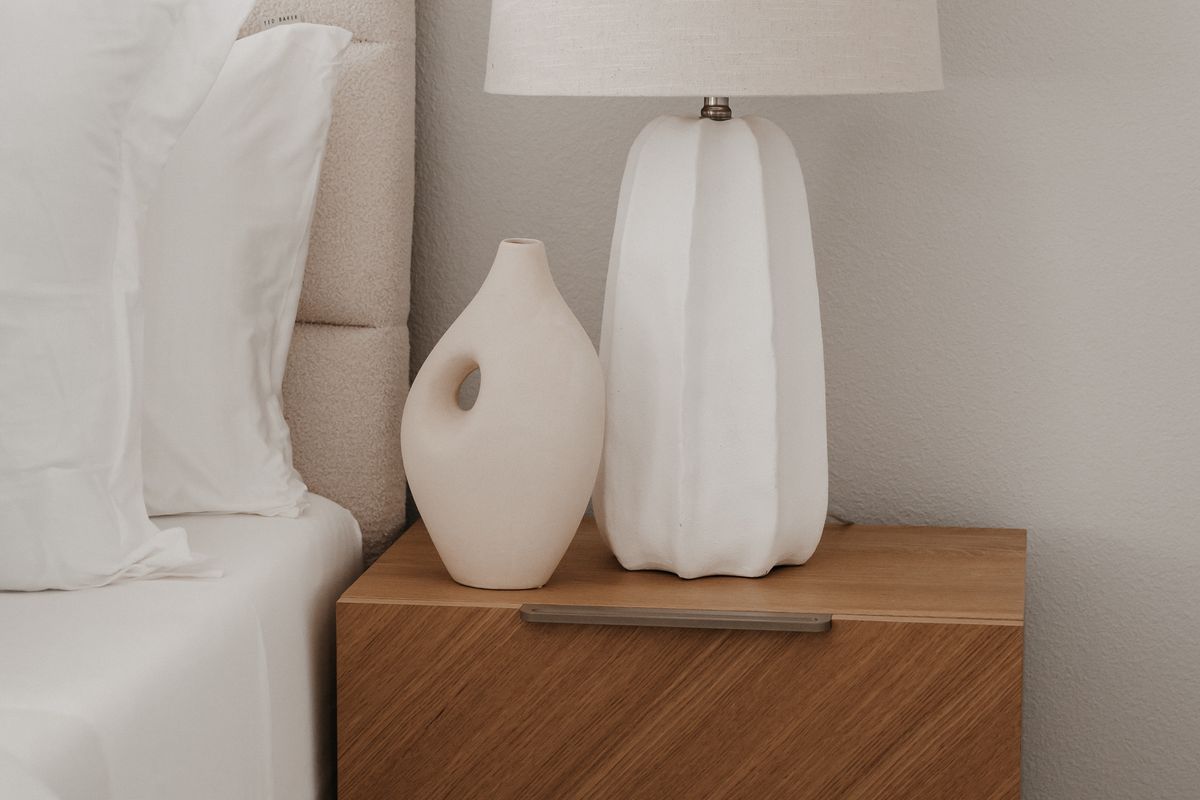
The short answer
The rule that matters most: your nightstand’s top surface should sit level with your mattress top, or one to two inches above it. Everything else — drawers versus shelves, charging, lamps — follows from picking the right height first and being honest about what actually lives on your nightstand.
Get the height right first
Measure from your floor to the top of the mattress, not the bed frame. Platform beds sit lower than frames with box springs, so a nightstand that worked on your old bed may suddenly be too tall. Level-with-mattress works because it puts a glass of water and your phone at the same plane as your hand when you’re lying down — no reaching up, no leaning down.
If you love a stand that’s slightly too short, a stack of books rescues it. If it’s too tall, nothing fixes it; don’t buy a nightstand you have to look up at from bed.
Drawers, shelves, or open surface
Pick storage by what your hands actually reach for at night and first thing in the morning:
- One drawer is enough for most people: chargers, lip balm, medications, the TV remote, a notepad. A single drawer keeps the bedside surface from becoming a shelf of clutter.
- Two drawers suit people who keep real supplies bedside — reading glasses plus a second pair, tissue, hand cream, spare cables.
- Open shelf is the minimalist choice and the easiest to fill with visual noise. It works best when you commit to a one-book rule.
- No storage at all (a simple pedestal or stool) is fine for a guest room where the bedside load is a phone and nothing else.
If you share a bed, two matching stands beat one shared wide table — you each get your own reach zone, and nobody’s items migrate across the middle.
The charging question
Plan any nightstand you buy today around cables, even if you don’t use them yet. The clean solutions, in order of effort:
- A grommet or rear cutout routes the cable down the back and out of sight — check that the model has one, or budget for a small cable hole you drill yourself.
- A charging station inside a drawer keeps the phone out of sight at night; several nightstands now ship with a built-in USB port or wireless pad, which is convenient but adds an electronic part that can age faster than the furniture.
- A separate bedside charging shelf works if you’d rather not drill anything.
Avoid the cable-over-the-corner look; it’s the difference between a bedside that feels finished and one that reads as temporary.
Style and material, briefly
Wood matches nearly every bedroom; painted stands bring color that bedding can echo. Metal-framed stands look light and suit small rooms — see our small bedroom layout guide for how furniture weight affects a room visually. Avoid glossy white tops if you’re heavy on hand cream and potions: they show rings unless you wipe them weekly.
For pairing with a specific bed, match height first and wood tone second — a slight tone difference reads as intentional, while a height mismatch reads as a mistake. Our platform bed frame review notes stand heights that pair with low frames.
Sizes that work
For a standard bed, a nightstand 18 to 24 inches wide handles lamp, phone, and a book without crowding. Narrower than 16 inches and the lamp fights the alarm clock for space; wider than 28 and you have built a second dresser. Depth between 15 and 18 inches keeps it clear of the walkway in smaller rooms.
FAQ
What height should a nightstand be? +
Level with the top of your mattress, or one to two inches above it. Measure from the floor to the mattress top, not the frame. That height puts a glass of water and your phone on the same plane as your hand when you are lying down, with no reaching up or leaning down.
Do nightstands need drawers? +
Only if clutter gathers on yours. A drawer hides glasses, chargers and small items, which suits most people. If you keep nothing but a book and a lamp, an open shelf or simple stool works and usually costs less. Pick storage based on what your hands actually reach for at night.
How wide should a nightstand be? +
Between 18 and 24 inches for most bedrooms. Wider pieces hold a lamp plus a book comfortably; anything over 24 inches starts crowding the bed in smaller rooms. Leave at least 2 inches of air between the nightstand and the mattress edge so bedding can hang naturally.
Keep reading
Bedroom Furniture
Best Platform Bed Frames: Wood, Metal, and Upholstered Picks
September 25, 2026
Bedroom Furniture
How to Choose Mattress Firmness: A Guide by Sleep Position and Weight
September 23, 2026
Bedroom Furniture
Bed Size Dimensions Explained: Twin, Full, Queen, and King
September 19, 2026