Bedding
How Often to Replace Pillows: Lifespan by Type
Most pillows last 1 to 3 years depending on fill. Here is a lifespan table by pillow type, the fold test that signals a dead pillow, and the hygiene reasons to replace on schedule.
By Ruth Alder · ·
Most pillows need replacing every 1 to 3 years, and the fill type decides where you land in that range. Two quick checks — the fold test and a morning stiffness check — tell you whether yours is due now or has life left. Replacing on schedule is not just comfort: an aging pillow collects dust mites and loses the neck support you bought it for.
Lifespan by pillow type
Fill material is the single biggest factor in how long a pillow stays supportive. Typical ranges based on published material properties and verified owner feedback:
| Pillow type | Typical lifespan | Main failure mode |
|---|---|---|
| Polyester fiberfill | 6–12 months | Clumping, permanent flattening |
| Down and feather | 1–2 years | Loft loss, feathers poking through |
| Memory foam (solid) | 2–3 years | Body impressions, slower rebound |
| Shredded memory foam | 18 months–2.5 years | Fill shifting, clumping |
| Latex | 3–4 years | Surface crumbling in older pillows |
| Buckwheat hulls | 3+ years | Hulls breaking down, flattening |
Polyester pillows are the shortest-lived by far — the fill is cheap and collapses quickly under nightly pressure. Latex is the outlier at the top end, which is why it commands a premium.
The table’s failure modes are the honest part of the spec sheet. A pillow does not usually fail all at once; it loses a little loft every night, and the failure mode listed here is what the loss looks like when it becomes a problem. Reading the failure mode matters as much as the number of months, because each one announces itself differently.
Why each fill fails the way it does
Polyester fiberfill starts as a tangle of hollow synthetic fibers that hold air. Nightly compression squeezes that air out, moisture from sleep makes the fibers stick together, and the tangle turns into clumps — which is why the failure shows up as flattening you can feel through the case. No amount of drying in the sun fully re-lofts it once the clumps form.
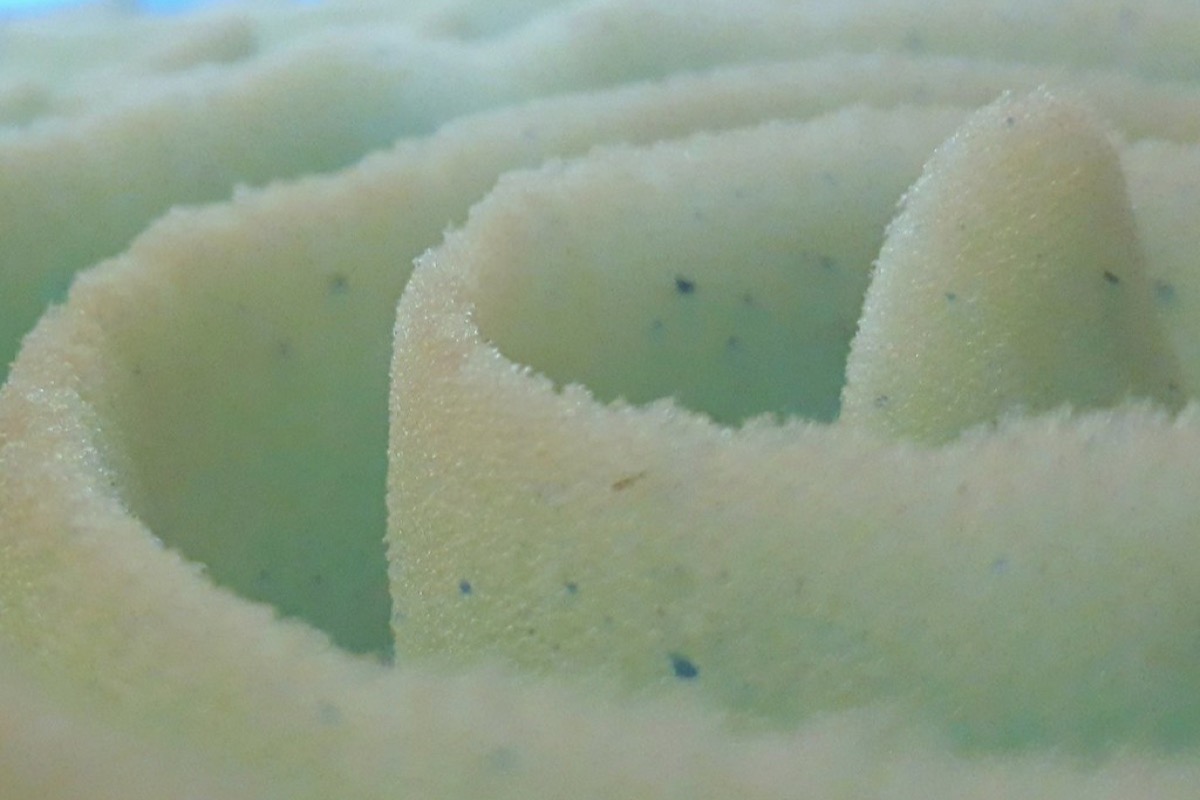
Down fails more gently: the clusters break and lose their ability to trap air, so the pillow packs down thinner each season. Feathers reach the end first, since quills work through ticking worn thin by years of washing. Memory foam’s failure is in its cell structure — the open cells that let it contour slowly fatigue under repeated body heat and pressure, which is why the failure mode reads as body impressions and slower rebound. Shredded foam keeps its resilience longer per piece but migrates, so the fill needs constant redistribution until clumping wins.
Latex and buckwheat sit at the other end for structural reasons. Latex is a dense, solid foam whose cells resist fatigue for years, and buckwheat hulls are simply hard to crush — they wear by grinding down rather than collapsing. Both still fail; they just fail on a different calendar.
The fold test and other warning signs
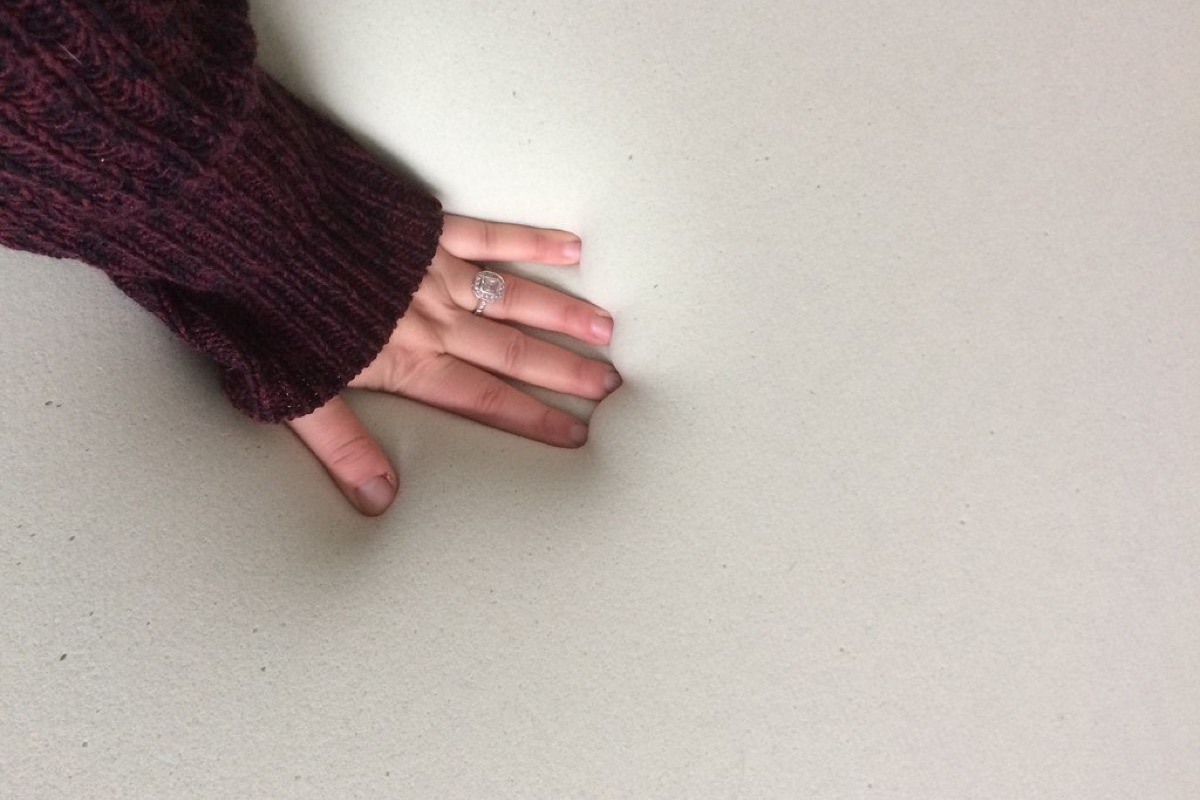
The fold test is the fastest check: fold the pillow in half, hold five seconds, release. It should push back open. If it stays folded, the loft is gone and so is the neck support. For solid memory foam, press your palm into the center instead — the impression should vanish within a few seconds.
The second check costs a morning: notice how your neck feels when you wake. A pillow in good shape leaves you neutral; a tired one leaves you stiff or aching, and the stiffness eases once you are up and moving. That daily signal usually arrives before any visible flattening does.
Beyond the fold test, replace a pillow when you notice any of these:
- You wake with a stiff neck or headaches that ease during the day.
- The pillow has yellow stains or a lingering odor that survives washing.
- You constantly fluff, punch, or fold it to get comfortable.
- Lumps or clumps you cannot redistribute by hand.
The hygiene case for replacing on schedule
Pillows absorb sweat, skin oils, and saliva every night, and dust mites feed on the dead skin that accumulates inside. A pillow past its lifespan can hold a significant mite population even when the cover looks clean — a known aggravator for allergy and asthma sufferers. Washing helps but does not reach everything inside a dense fill; our bedding washing routine covers what laundering can and cannot do.
The mechanics explain why washing alone never wins. The contaminants live in the fill, not on the cover, and a pillowcase is a loose weave by design. A wash cycle flushes what the water can reach; whatever is pressed deep into clumped fiberfill or solid foam stays put. Over years, that residue is what the yellow stains and the surviving odor are made of.
If you use a protective pillow encasement and wash pillowcases weekly, you extend the hygiene window — but not the structural one. Support loss is physical, not cosmetic.
Making the next pillow last
Use a zippered protector under the pillowcase, wash it monthly, and air the pillow out occasionally to release trapped moisture. Avoid washing memory foam and latex in a machine — spot clean instead. And when you replace, match the fill to your sleep position rather than buying the same model by default; our mattress firmness guide covers how sleep position changes support needs across the whole bed, not just the pillow.
The protector deserves the emphasis. It takes the sweat and the oils before the fill does, which is what keeps the hygiene clock slow. Two pillows on the same shelf, one protected and one bare, will not be the same pillow two years later.
Putting the schedule to work
A schedule you have to remember is a schedule that slips, so anchor it to something the calendar already does. The daylight-saving clock change is the common anchor: spring forward, check the pillows. Run the fold test on every pillow in the house, note which fill each one is, and set the next check against the table’s range for that fill.
Write the purchase month somewhere durable — a tag on the zipper pull, a note on the phone. The date turns a vague “is this pillow old” into an arithmetic question, and arithmetic answers. When the calendar, the fold test, and the morning neck all point the same direction, the decision is already made.
One habit closes the loop: check every pillow in the house at the same sitting. Pillows bought a season apart age apart, and a five-minute annual audit catches the one that slipped past its range while the rest still pass.
Layer recap
Specs first, owners second. Check the layer you are about to buy against the layers above and below it — most bad reviews are mismatches, not bad products.
- Foundation
- Slat spacing and center support decide whether the mattress above keeps its shape. Read the foundation guide
- Support
- Firmness is a 1–10 scale, not a feeling — read it by weight and sleep position. Read the support guide
- Comfort
- A topper fixes one specific problem. Anything over 2 in only changes surface feel. Read the comfort guide
- Warmth
- Fill power means nothing without fill weight beside it. Read the warmth guide
- Surface
- Weave, staple length and GSM — then read the wash count, not the thread count. Read the surface guide
- Finish
- Loft has to match sleep position, and it has to come back overnight. Read the finish guide
Bed Layers, Decoded puts all six layers on one page — the numbers worth checking, the marketing traps, and how to read owner feedback before you order.
FAQ
How often should you replace memory foam pillows? +
Every 2 to 3 years. Solid memory foam holds its shape longer than fiberfill but gradually loses responsiveness and develops body impressions. Shredded memory foam pillows tend to age slightly faster because the fill shifts and clumps.
What is the fold test for pillows? +
Fold the pillow in half and hold it for a few seconds. A healthy pillow springs back open on its own. A pillow that stays folded has lost the loft that supports your neck, and it is time to replace it. This test works for fiberfill and down pillows, not solid memory foam.
Can old pillows make you sick? +
Old pillows accumulate dust mites, their droppings, and dead skin over years of use, which can worsen allergies and asthma symptoms. Washing helps, but a pillow that is past its lifespan cannot be fully restored, which is why replacement on a schedule matters for allergy sufferers.