Bedroom Furniture
Small Bedroom Layout Ideas: 8 Rules That Make a Tiny Room Work
Walkway widths, bed placement, and furniture scale — the layout geometry that makes a small bedroom feel double its size.
By the Snug Casa editors · ·
The short answer
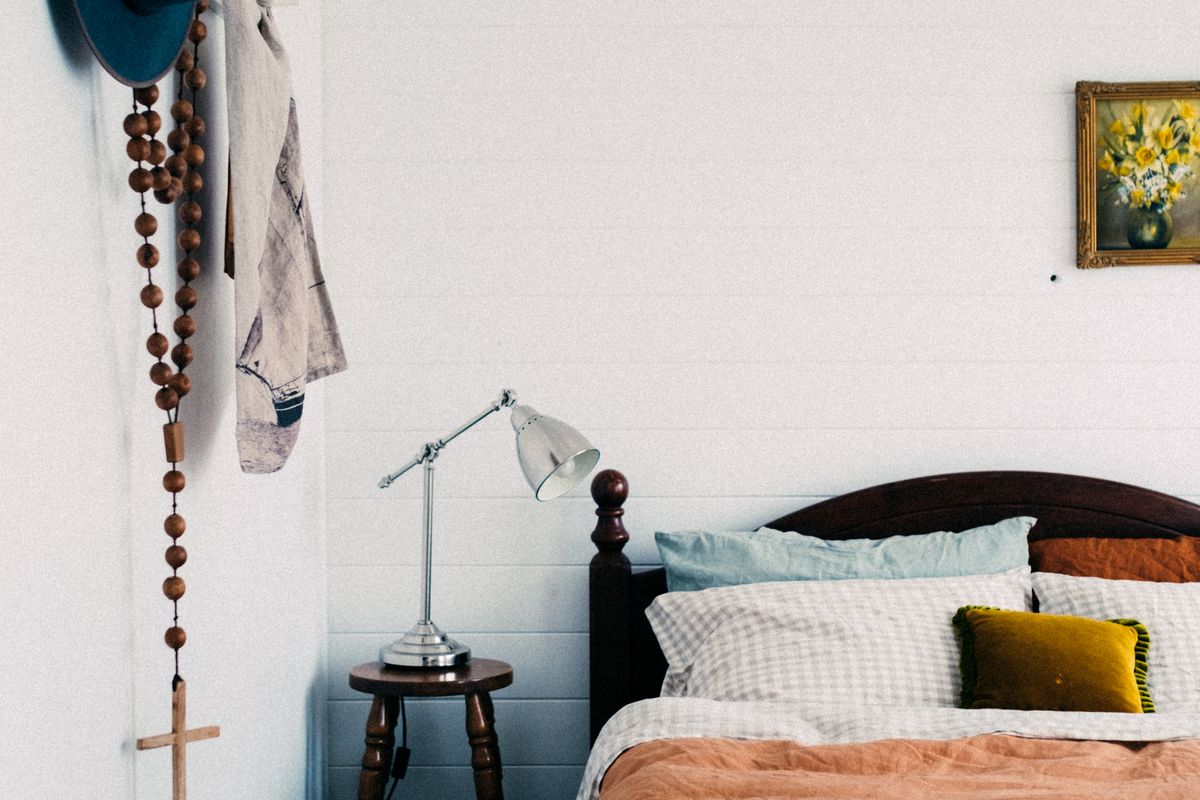
A small bedroom works when three things are true: the bed sits where it blocks the fewest paths, every walkway keeps at least 24 inches of clearance, and the furniture is scaled to the floor area rather than to a catalog photo. Get those right and even a 9 × 9 room stops feeling like a corridor.
Rule 1: Place the bed against the longest wall, headboard centered if possible
In most small rooms the bed eats the floor, so its position decides everything else. The longest wall wastes the least space. A centered headboard reads as calm; if the room forces an off-center bed, a low headboard (or none, as with many platform bed frames) keeps the asymmetry from shouting.
Rule 2: Keep 24 inches of walkway — 36 for the main path
This is the number that separates workable from cramped:
- 24 inches minimum beside the bed for making it and passing through.
- 30–36 inches for the route from the door to the bed, which you’ll walk nightly in the dark.
- 30 inches in front of a dresser or closet door so drawers and doors can open.
Measure before buying. A bed that technically fits but leaves an 18-inch squeeze at the foot will annoy you daily — see bed size dimensions explained for the exact mattress numbers.
Rule 3: Push the bed toward a corner only in really tight rooms
Corner placement (headboard in the corner, bed along two walls) frees the most floor but makes one side inaccessible — fine for a child’s room or solo sleeper, annoying for anyone who makes the bed daily. If you do it, put the open side toward the door.
Rule 4: Scale furniture to the floor area, not the wall
A nine-foot wall doesn’t want a nine-foot dresser. In rooms under 120 square feet, aim for furniture no deeper than 18 inches except the bed itself. A shallow dresser (14–16 inches deep) holds nearly as much and reclaims a foot of walking space — the arithmetic behind dresser versus wardrobe decisions in tight rooms.
Rule 5: Vertical storage is free floor
The walls above the bed and above the dresser are storage you’ve already paid for. A single shelf 18 inches above the headboard height holds books and a lamp; tall narrow bookcases (about 24 by 72 inches) add surprising capacity on a tiny footprint.
Rule 6: One mirror, placed across from light
A mirror opposite the window doubles the daylight and visually extends the room. Opposite the bed it mostly doubles the bed. One well-placed mirror does more for a small room than any wall art.
Rule 7: Keep the sightline to the floor
The more floor you can see, the bigger the room reads. Furniture with visible legs, wall-mounted lamps instead of bulky table lamps, and a bed without a long dust ruffle all expose floor. Heavy skirts and legless cabinets visually anchor everything to the ground.
Rule 8: One pattern, one color family
In a small room, visual noise comes from many competing patterns and colors, not from furniture count. Limit bedding and curtains to one color family and one pattern at most. The room will still read as “decorated” — it will just read as bigger while doing it.
What to skip entirely
Bench seats at the foot of the bed, oversized armchairs, and sculptural floor lamps all die in small bedrooms — they’re the first things to trip over at night. If you need a seat, a storage ottoman under 18 inches wide does double duty; otherwise the bed is the seat.
FAQ
Where should a bed go in a small bedroom? +
Against the longest wall, with the headboard centered if the room allows. The bed eats most of the floor in a small room, so its position decides every walkway. If the layout forces an off-center bed, a low headboard or frameless platform keeps the asymmetry from shouting.
How much space do you need around a bed in a small room? +
At least 24 inches beside the bed for making it and passing through, and 30 to 36 inches on the route from the door to the bed — the path you walk nightly in the dark. Below 24 inches the room reads as cramped no matter how well it is arranged.
Is it okay to put a bed in front of a window? +
It can work in a room where no other wall fits the bed. The drawbacks are draft in winter, light leaking around the headboard, and the headboard blocking the window's operation. A low headboard and blackout curtains solve most of it; just avoid blocking the only heat source in the room.
Keep reading
Bedroom Furniture
Best Platform Bed Frames: Wood, Metal, and Upholstered Picks
September 25, 2026
Bedroom Furniture
How to Choose Mattress Firmness: A Guide by Sleep Position and Weight
September 23, 2026
Bedroom Furniture
Bed Size Dimensions Explained: Twin, Full, Queen, and King
September 19, 2026