Buying Guides
First Apartment Essentials: A Bedroom and Kitchen Starter List
What a first apartment actually needs on day one: sleep, storage, cooking and cleaning basics. This list skips the decor and covers the minimum functional kit, room by room.
By Ruth Alder · ·
A first apartment needs about 30 functional items, not a showroom. The list below covers what daily life actually touches — sleep, wash, cook, clean, store — and buys it in that order, so the apartment works within a weekend. Total starter budget lands between $1,000 and $2,500 for most cities.
The bedroom: sleep first, frame later
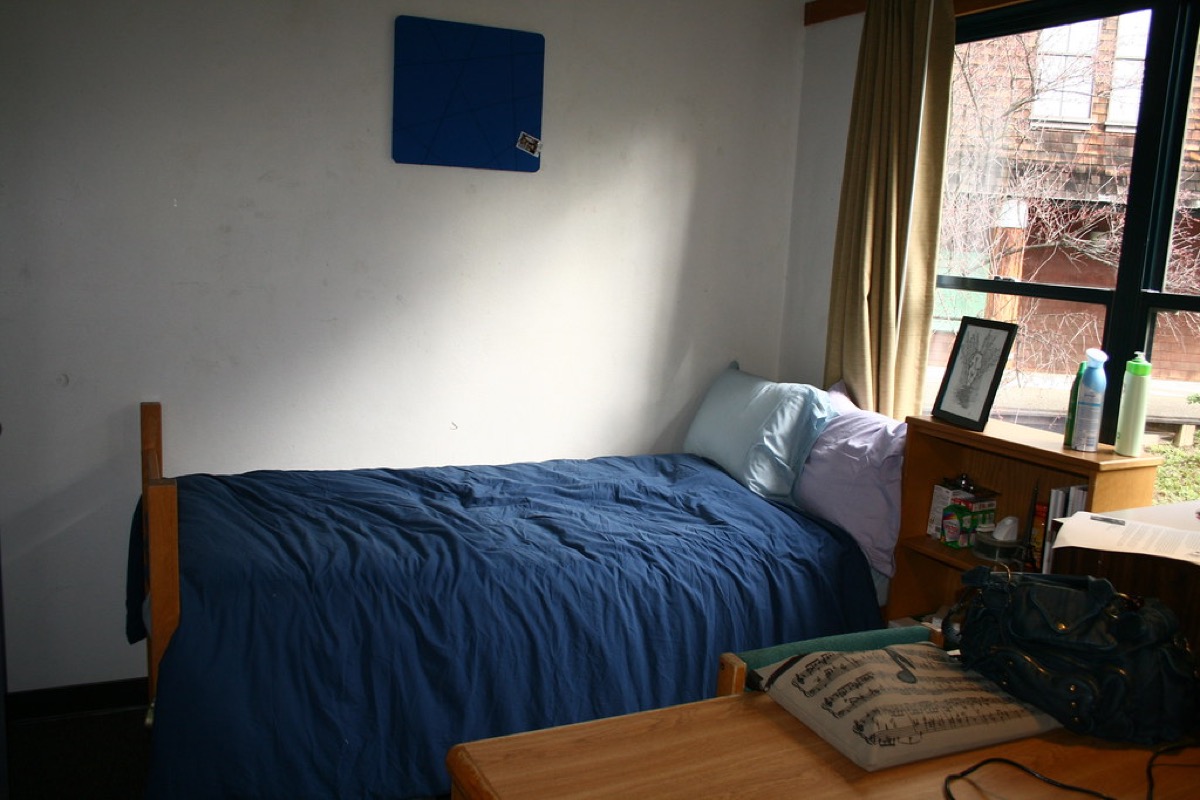
The mattress is the one item worth new money and the largest single purchase — our mattress shopping checklist walks the trial terms and warranty fine print before you commit. The frame can wait: a mattress on the floor works for weeks, and frame height decides under-bed storage options anyway. Bedding needs two sheet sets, a pillow per sleeper, a duvet with washable cover, and a mattress protector — the full stack is laid out in our bed layering guide. Add a lamp within arm’s reach, one small nightstand or stool, and a blackout option for the window if the street lights in.
Two sheet sets is the load-bearing detail. One on the bed and one in the wash means an stripped-bed emergency never happens at 11 p.m. on a work night, and the second set costs a fraction of the disorder it prevents.
The bathroom: three purchases
Shower curtain with rings and a liner, two bath towels and two hand towels per person, and a bath mat. That is the functional set. Toiletries and a plunger finish it — the plunger is the item everyone forgets until the night they need it. Buy towels in the mid-weight band our bath towel guide explains by GSM, so they dry overnight in a shared bathroom.
A shared bathroom raises the towel count rather than the towel quality. Two per person means one drying while one is in use, and drying space becomes the real constraint — hooks over the door solve it where towel bars do not exist.
The kitchen: cook what you cook
Stock the kitchen for your real diet, not an imagined one. The baseline: one 10-inch pan, one 2-quart pot and one larger pot, a cutting board, a chef’s knife, a spatula and a spoon, a colander, a baking sheet, and a kettle. Tableware for four even if you live alone. Storage containers for leftovers and a sponge plus dish soap complete it. Skip single-task gadgets until a recipe demands them twice.
The test for every kitchen purchase is frequency, not capability. A gadget that can do something is worthless; a tool you reach for weekly pays for itself. The imagined cooking self buys the stand mixer and the air fryer in week one; the real cooking self, three months in, mostly wants a second good knife and a bigger cutting board. Let the first grocery run tell you which self lives here.
One overlooked essential: a kitchen towel rotation. Three to six towels handle drying hands, dishes and counters — our kitchen towel picks explain why one towel cannot do all three jobs.
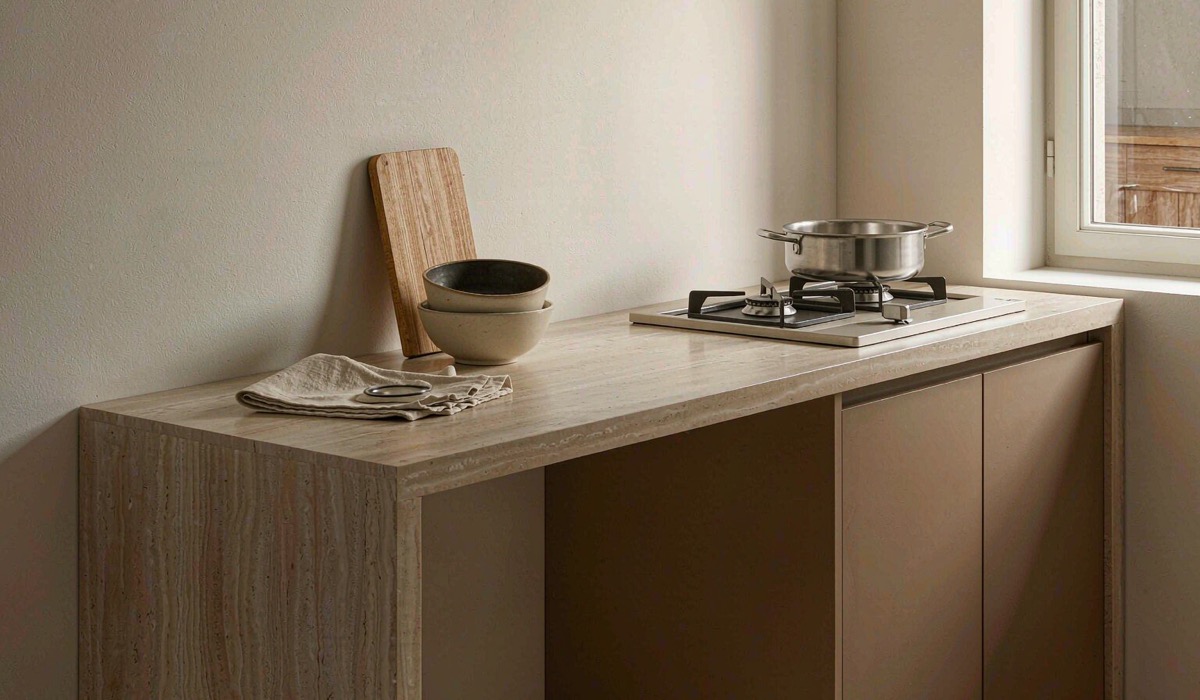
The starter kitchen: one pot, one pan, and a board are enough.
When the budget runs out before the list does
Moving rarely goes to plan, and the starter budget above assumes nothing catastrophic. When money runs short, protect the sleep layer and the bathroom layer first: a mattress and a shower curtain cannot be improvised, while a kitchen runs on two pans and a pot longer than anyone expects. The cleaning kit collapses to a broom, cloths, and one cleaner. Laundry bags beat a vacuum for the first month.
What never moves down the list is the plunger, and what never moves up is decor. The apartment functions the day every daily task has its tool, and it functions at exactly the same level whether the walls are bare. Spend the last of the budget on the missing tool rather than the poster — the poster photographs better, the tool works every day.
Cleaning and laundry: the boring kit
A vacuum suited to the floor type, a broom for the kitchen, an all-purpose cleaner, microfiber cloths, a toilet brush, trash cans with liners for kitchen and bathroom, and a laundry basket. If the apartment has a washer, a month’s worth of detergent; if not, two collapsible bags for the laundromat run. Indoors drying racks matter more in small apartments than people expect — our indoor drying guide covers how to dry laundry without musty smells.
This is the category to buy cheap and watch closely. The vacuum that struggles on the apartment’s actual flooring, the cleaner that leaves streaks on the actual counters — those failures show up within two weeks, and replacements cost less than overbuying upfront. Buy the minimum version, learn what the apartment needs, then upgrade the one tool that earned more money.
Storage: only after a week of living
Do not buy storage before move-in. Live in the apartment for a week and the closets will tell you what they actually need — which is why this list ends there. The starter set is one shoe rack or over-door organizer, a few hangers of one type (matching slim hangers, per our small closet system), and a under-bed container for off-season clothing. Everything else waits until you know where the clutter pools; our bedroom declutter checklist is the follow-up.
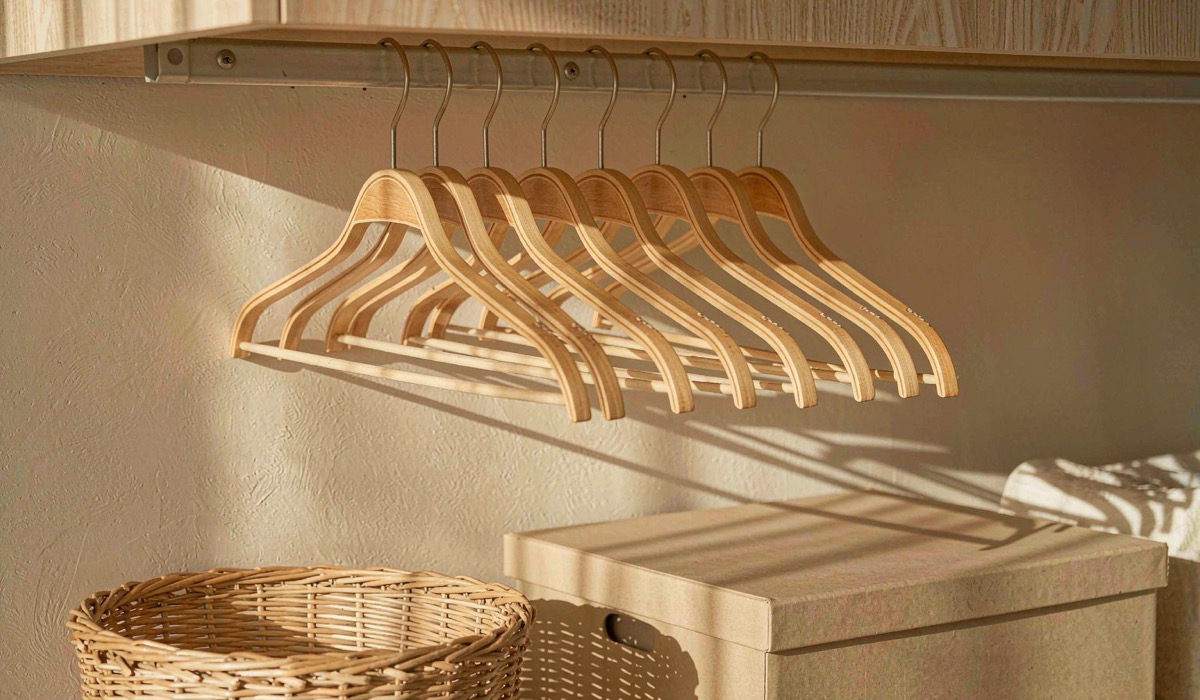
A week of living tells you which storage the apartment actually needs.
Where second-hand makes sense
A first apartment is the best case for second-hand furniture, with one exception. Tables, dressers, shelves, and chairs survive moves well and cost a fraction used; the mattress is the exception, because a used mattress carries what you cannot inspect away. Bed frames are safe to buy used — the frame is metal or wood, and a wipe-down resets it.
The trap is buying used at the wrong moment. Nothing goes in the cart before the apartment is signed and measured, because second-hand listings move on days rather than weeks, and the piece that fits the room you ended up with is rarely the piece you saw first. Our when to buy furniture guide covers the seasonal timing; the discipline here is simpler — functional list first, second-hand upgrades once the room has told you its sizes.
What to skip on purpose
Fancy appliances before week one, matching furniture sets, rugs before you know the room’s traffic pattern, and anything bought to fill a wall. First apartments teach you how you live; the second apartment is where that knowledge gets spent on better things. Buy the functional kit, live with it a month, then upgrade the two or three items that annoy you daily — that shortlist is worth more than any shopping guide.
Layer recap
Specs first, owners second. Check the layer you are about to buy against the layers above and below it — most bad reviews are mismatches, not bad products.
- Foundation
- Slat spacing and center support decide whether the mattress above keeps its shape. Read the foundation guide
- Support
- Firmness is a 1–10 scale, not a feeling — read it by weight and sleep position. Read the support guide
- Comfort
- A topper fixes one specific problem. Anything over 2 in only changes surface feel. Read the comfort guide
- Warmth
- Fill power means nothing without fill weight beside it. Read the warmth guide
- Surface
- Weave, staple length and GSM — then read the wash count, not the thread count. Read the surface guide
- Finish
- Loft has to match sleep position, and it has to come back overnight. Read the finish guide
Bed Layers, Decoded puts all six layers on one page — the numbers worth checking, the marketing traps, and how to read owner feedback before you order.
FAQ
What should you buy first for a new apartment? +
In order: a place to sleep (mattress first, frame later), bedding, shower curtain and bath towels, and basic kitchen tools for the meals you actually cook. Everything else can wait for the first paycheck. The common mistake is buying decor before function — the apartment works once every daily task has its tool.
How much should furnishing a first apartment cost? +
A realistic starter budget is $1,000 to $2,500 for the essentials across bedroom, kitchen and bathroom, depending on city and whether the apartment comes with major appliances. The mattress is typically the largest single item; thrifted tables and discount-store kitchen basics absorb the rest. Expect to upgrade pieces over two years rather than buying it all at once.
Do you need a bed frame right away? +
No. A mattress on the floor with a dust ruffle or skirt works for the first weeks — many people then discover they prefer the low platform look anyway. A frame is worth buying once you know the room layout, since frame height changes storage options under the bed; our under-bed storage guide covers that trade-off.